Avoid Fines: Hornsey Van Loading Rules In N8
Posted on 12/07/2026
If you are planning a move, a delivery, or even a quick furniture pickup in Hornsey, the loading spot you choose can make or break the day. One sloppy stop on the wrong stretch of road, or a van left awkwardly while you "just grab one more box," can quickly turn into a fine, a warning, or a very stressed-out driver. This guide to Avoid Fines: Hornsey Van Loading Rules In N8 is here to help you keep things simple, legal, and calm.
Hornsey sits in that classic London mix of busy residential streets, tighter junctions, commuter traffic, and short loading windows that look easy until you're actually there, van running, hazard lights on, trying to keep an eye on the clock. So let's make it straightforward. You'll learn how loading rules typically work, what to check before you stop, how to avoid common mistakes, and how to plan a move without the usual last-minute panic. It's not glamorous, but it is useful.
Why Avoid Fines: Hornsey Van Loading Rules In N8 Matters
Loading a van in Hornsey is not just about speed. It is about choosing a spot that is suitable for the vehicle, safe for pedestrians, and consistent with local parking controls. In practice, that means reading signs carefully, understanding whether the bay allows loading, and not assuming that "just a few minutes" will be ignored. In London, enforcement can be quick, and Hornsey is no exception.
Why does this matter so much? Because moving days are already full of friction. You've got stairs, boxes, a mattress that doesn't want to turn the corner, maybe a sofa that suddenly looks wider than the hallway. The last thing you need is a ticket under the wiper, or a driver getting distracted by trying to work out if the van is legally positioned. One small mistake can snowball into delays, extra costs, and a much longer day than expected.
There's also the wider local context. Around busy parts of N8, such as roads near transport links or town-centre style areas, a van may affect traffic flow more than a car would. That is why loading rules tend to be stricter in practice, even where the formal sign looks forgiving. If you want a broader view of route choices and sensible stopping points, it can help to read this guide to the best van routes and loading spots in N8 alongside this article.
Expert summary: the safest approach is to treat every loading stop as if it will be checked. That mindset sounds cautious, but honestly, it saves money and stress. And in Hornsey, that is half the battle.
How Avoid Fines: Hornsey Van Loading Rules In N8 Works
Hornsey van loading rules usually come down to a few practical questions: where are you stopping, how long will you be there, does the location permit loading, and is the vehicle obstructing traffic or access? The answer is not always written in one neat sentence on a sign. Sometimes you need to combine what the sign says with the road marking, the bay type, and common sense. Slightly annoying, yes. But manageable.
In general, loading rules are influenced by:
- the parking restriction on the road or bay
- whether loading is explicitly allowed during certain hours
- the size and positioning of the van
- how long the vehicle remains stationary
- whether someone is actively loading or unloading
- local traffic conditions and access needs
A key point: "loading" is usually treated differently from general parking, but it is not an excuse to leave a van sitting indefinitely. If there is a loading exemption or local allowance, it often depends on continuous activity and reasonable timing. Put simply, if nobody is moving items, the exemption may not protect you. That's where people get caught out.
For moves near busier access points, timing becomes especially important. A short stop outside a property might be fine early in the morning, then much riskier later when the road fills up. If you're moving near Hornsey station or trying to work around a tight time slot, a local strategy helps. You might find these Hornsey station loading strategies useful for thinking through timing and access pressure.
And if your move is happening near busier civic or parking-managed areas, you'll want to think one step ahead. The difference between a smooth loading stop and a fine often comes down to whether the van was planned around the location, not just dropped into it.
Key Benefits and Practical Advantages
Following loading rules properly does more than avoid fines. It makes the whole move work better. That might sound obvious, but when people are rushing, they often forget how much time is wasted by a bad parking decision. You can save yourself several headaches with one sensible stop.
- Lower risk of penalties: The most obvious benefit, of course.
- Faster loading: The closer and safer the van is parked, the fewer wasted steps.
- Less lifting strain: Shorter carrying distances reduce the chance of injury or damage.
- Better control over timing: You're less likely to fall behind schedule.
- Less stress for neighbours and pedestrians: A tidy loading plan usually causes fewer complaints.
There's another benefit people often miss: better decision-making under pressure. If the loading stop is organised, the rest of the move feels more under control. That matters for families, students, older movers, and anyone doing a same-day job where the clock is already shouting at you. For a useful companion read, packing hacks for a smoother house move can help reduce the amount of time the van has to wait.
In practical terms, good loading discipline often means fewer back-and-forth trips, cleaner handovers, and less awkward hovering outside a property while someone searches for the last lamp base. Truth be told, the calm version of moving is the version people remember most kindly afterwards.
Who This Is For and When It Makes Sense
This topic matters if you are doing almost any kind of move or collection in Hornsey. If you're thinking, "It's just a small van, does it really apply to me?" the answer is usually yes. The scale changes, but the rules still matter.
It is especially relevant for:
- house movers using a removal van or man and van service
- flat and studio movers in tight N8 streets
- students moving with mixed furniture and boxes
- office teams shifting equipment in a short window
- single-item collections such as sofas, beds, or appliances
- same-day or urgent moves where there is little time to improvise
If you are moving from a flat with narrow stairs, the loading stage becomes even more delicate. You do not want the van parked too far away, because it turns every trip into a workout. That is why some people combine careful loading with broader removal planning, especially when the property is tricky. A good place to start is safe removal options for Hornsey flats with narrow stairs.
It also makes sense when you're moving something awkward. Think piano, mattress, wardrobe, freezer, or a sofa that has not been kind to you during the booking conversation. Those jobs need extra space and careful timing. If you're not sure whether the item should be handled professionally, this piano moving guide is a good reminder that not every heavy item is a DIY victory.
Step-by-Step Guidance
Here's a practical way to plan a loading stop in Hornsey without overcomplicating it. It's not perfect, but it works well in real life.
- Check the address and street layout first. Look at whether the road is narrow, one-way, busy, or lined with restrictions.
- Look for loading signs and bay markings. Don't guess. If the bay says loading only, treat it as a loading bay, not a free parking space.
- Estimate how long the loading will actually take. Be honest here. Five minutes in theory can become fifteen very quickly.
- Decide who is carrying what. Assign people to boxes, breakables, furniture, and door control.
- Park in the most practical position allowed. Keep access clear, and leave space for pedestrians and other vehicles where possible.
- Keep loading continuous. If the van is there for loading, loading should be happening.
- Watch the clock and the street. If your stop is drifting, move the van sooner rather than later.
- Confirm the handover is complete before leaving. Check the van, the pavement area, and the property one final time.
One little habit makes a big difference: stage your items near the exit before the van arrives. That way the driver is not waiting while someone wraps crockery in a tea towel and wonders where the tape went. If you want help making the whole day more efficient, decluttering before the move can cut down the amount you need to load in the first place.
For a lot of Hornsey moves, timing the loading stop matters as much as the stop itself. A van that arrives prepared, with boxes stacked and routes pre-thought-through, is less likely to wander into a bad parking decision under pressure.
Expert Tips for Better Results
In our experience, the best loading plans are not complicated. They are disciplined. A few smart habits can do more than a long checklist nobody uses.
- Arrive early enough to assess, not just to stop. Those first two minutes tell you a lot.
- Keep the driver and loaders in sync. People should not be standing around waiting for instructions every few minutes.
- Use the closest legal stopping point, not the closest convenient one. There's a difference, and it matters.
- Protect the van interior before loading begins. Blankets, straps, and edge protection help reduce damage and re-handling.
- Break the job into short loading runs. Heavy items first, then boxed items, then loose bits and final checks.
There is also a human tip that doesn't sound very technical but saves people every week: make one person responsible for the loading decision. Too many cooks, and all that. If everyone is half-deciding, the van can sit in the wrong place longer than intended.
For heavier lifting, it helps to understand posture and movement before the van even arrives. A simple refresher like kinetic lifting tips and tricks or solo lifting strategies for heavy objects can reduce avoidable strain. You know the type of mistake: one twist, one wobble, and suddenly everyone is silent for the wrong reason.
If your move is bigger or includes specialist items, it may be worth using a team that already knows Hornsey access patterns. Local familiarity can save awkward guesswork, especially around tighter roads and time-limited stops.
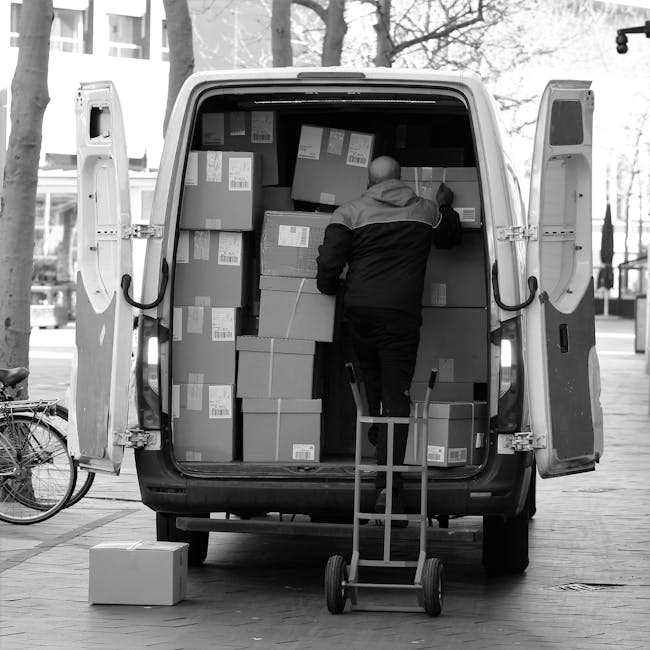
![Inside the open rear of a delivery van, numerous cardboard boxes of varying sizes are stacked on the van's floor and shelves, some labeled with 'FRAGILE' stickers. Several boxes are positioned on the pavement outside the van, awaiting loading or unloading. The boxes are secured with packing materials such as paper and plastic wrap to ensure safe transport during home relocation or furniture transport. The van is parked on a paved surface adjacent to an outdoor area with a metal fence and leafless trees visible in the background, indicating a likely cold season. The image captures the loading process managed heightening the efficiency of packing and moving operations, with the focus on the careful handling of boxes within the vehicle, consistent with house removal services provided by [COMPANY_NAME]. Natural daylight illuminates the scene, emphasizing the organized packing as part of the logistics for a professional removal or relocation service in N8, Hornsey.](/pub/blogphoto/avoid-fines-hornsey-van-loading-rules-in-n82.jpg)
Common Mistakes to Avoid
Most fines and delays do not happen because someone is careless in a dramatic way. They happen because of small assumptions. Hornsey loading is full of those traps.
- Assuming loading is always allowed. It is not. Signs matter.
- Leaving the van unattended for "just a minute." That minute can become the issue.
- Blocking driveways or crossings. Even if you think it is temporary, it can draw complaints fast.
- Underestimating how long loading really takes. The estimate is often optimistic. Very optimistic.
- Parking too far from the property. This increases carrying time and the temptation to overstay.
- Using a loading bay incorrectly. A bay with loading restrictions is not a casual parking space.
Another big one is failing to check the wider move plan. For example, you might secure a decent loading point but forget that the building has stairs, narrow halls, or a time-limited lift booking. That is how the whole schedule slips. A more rounded approach, like reading expert cleaning advice for moving day or calm, stress-free moving guidance, can help you see the move as one system rather than a pile of separate headaches.
Let's face it, the classic mistake is believing that a well-meaning "it'll be fine" is a parking plan. It isn't. And Hornsey, like most of London, tends to punish that sort of optimism.
Tools, Resources and Recommendations
You do not need a mountain of gear to load a van correctly, but the right basic tools make things easier and safer. They also reduce the chance that items get dropped while someone is trying to carry too much at once.
| Tool or resource | Why it helps | Best for |
|---|---|---|
| Moving blankets | Protect furniture and van walls from knocks | Sofas, tables, wardrobes |
| Straps and ties | Stops items shifting during transit | Heavy or stacked loads |
| Dolly or sack truck | Reduces lifting strain and speeds up transfers | Boxes, white goods, heavy parcels |
| Labels and markers | Makes unloading faster and less chaotic | Every household move |
| Local move planning notes | Helps track loading times, access points, and parking limits | Hornsey streets with tighter controls |
For item-specific planning, a few useful reads can make life easier. If you're moving a bed or mattress, this mattress moving advice is practical and grounded. If storage is part of your plan, especially when dates do not line up neatly, sofa storage success tips can help you avoid damage while things are off the move-day floor.
If you are comparing support options, you may also want to look at general services such as man with a van Hornsey, man and van Hornsey, or broader removal services in Hornsey. The right choice depends on volume, access, and how much lifting you want to take on yourself.
Law, Compliance, Standards, or Best Practice
While this article is not legal advice, there are a few sensible compliance principles worth keeping in mind. In London, parking and loading decisions are usually shaped by local restrictions, road markings, traffic flow, and whether the vehicle is genuinely involved in loading or unloading. That means you should never assume a stop is acceptable simply because the van is not left there for long.
Good best practice usually includes:
- reading all signs at the actual stopping point, not just nearby ones
- checking whether loading is time-limited or conditional
- keeping the loading process active and orderly
- avoiding obstructions to driveways, crossings, junctions, and emergency access
- making sure the driver understands the local street constraints before arrival
For businesses, the standard should be even higher. Office moves, for example, often involve multiple people, tighter time windows, and more pressure to park "wherever works." That is exactly when mistakes happen. If your move is commercial, it is worth thinking about office removals in Hornsey as a planned logistics task rather than a simple van booking.
There are also safety and responsibility angles. A good move respects pedestrians, neighbours, and the crew doing the lifting. If you want to see how a reputable mover frames those responsibilities, the pages on health and safety, insurance and safety, and terms and conditions are worth reviewing before you book. Not exciting, admittedly. Still important.
Options, Methods, or Comparison Table
When you're loading a van in Hornsey, there are usually a few workable approaches. The right one depends on the street, the amount of furniture, and how much risk you want to take with timing.
| Method | Best for | Pros | Watch-outs |
|---|---|---|---|
| Direct outside-the-door loading | Quiet residential streets and short loads | Fastest carrying distance, less lifting | Can be hard to do legally on busy roads |
| Short-stay loading bay use | Timed moves with clear loading allowances | Structured and usually efficient | Must respect the exact rules and time limits |
| Remote legal parking plus trolley transfer | Tough streets or restricted zones | More flexible, sometimes safer for compliance | More walking, more labour, slower overall |
| Book a local removals team | Complex or high-value moves | Planning, handling, and timing are all coordinated | Can cost more than self-managed loading |
If you are torn between doing it yourself and hiring help, think about the nature of the property, not just the price. A simple flat move may be fine with a modest van. A top-floor flat with awkward stairs is a different animal entirely. In those cases, a dedicated option such as flat removals in Hornsey can make the whole process feel less chaotic.
And for families or people moving full households, the wider planning support around house removals Hornsey often matters more than the parking spot alone. The loading rule is just one piece of the puzzle.
Case Study or Real-World Example
Here's a realistic scenario. A couple in Hornsey needs to move from a first-floor flat on a busy residential road. They have a sofa, a bed frame, six boxes of books, a freezer, and the kind of miscellaneous items that seem to multiply overnight. They want the van close to the door, naturally, because the stairwell is narrow and every extra metre matters.
On arrival, the driver sees a nearby bay that looks convenient but is not clearly marked for loading at that time. It would be very easy to say, "We'll be quick." But that is exactly the moment where good practice saves the day. Instead, the team checks the road signs, chooses a position that is actually allowed, and keeps loading continuous. The sofa goes in first, then the mattress, then the heavier boxes, then the smaller items.
The difference is not dramatic from the outside. Nobody is applauding in the street. But the move runs on time, the neighbours are not blocked, and the van leaves without drama. That's a successful day, really.
In a different version of this story, the team ignores the restrictions, leaves the van in the "obvious" spot, and gets a ticket while carrying the final boxes. Same furniture, same street, different outcome. This is why loading rules are not just paperwork. They shape the whole move.
If you need a quick planning list for short-notice jobs, this urgent Hornsey move checklist is a handy companion.
Practical Checklist
Use this before the van arrives, and again right before you set off.
- Check the exact street name and loading restrictions
- Confirm whether loading is allowed at the planned time
- Identify the safest legal stop with enough room for doors and traffic
- Prepare labels for boxes and fragile items
- Stage items near the exit so the van is not waiting
- Assign one person to guide loading decisions
- Keep walkways, driveways, and crossings clear
- Use straps, blankets, and trolleys where needed
- Re-check the van position before leaving it unattended
- Keep an eye on elapsed time, especially in managed parking areas
- Plan an alternative loading point in case the first choice is unavailable
- Make sure the final sweep includes the property and the pavement area
If bulky waste or unwanted furniture is part of the move, do not leave that decision until the last ten minutes. It's worth comparing disposal options early. A useful read here is bulky waste in Hornsey: movers versus council, which can help you think through what to move, what to store, and what to clear out.
Conclusion
Hornsey van loading rules in N8 are not something to guess your way through. They are a practical part of moving well, and they matter because fines, delays, and awkward access problems can quickly turn a manageable job into a difficult one. If you check the signs, plan the stop, keep loading active, and think ahead about timing, you're already ahead of most people.
The real win is not just avoiding a penalty. It is making the move feel orderly. Less shuffling, less waiting, fewer "where did we put the tape?" moments. And yes, a little less stress in the shoulders by the end of the day.
If your move is bigger than it first looked, or you want a local team to help with planning and handling, it is sensible to explore support options early rather than waiting until the van is half-full and the pressure is rising.
Get a free quote today and see how much you can save.
After all, a calm move is a better move. That's usually the bit people remember when the dust settles and the kettle is finally on.